A poorly ventilated attic can contribute to uncomfortable indoor temperatures, excessive moisture, and premature deterioration of roofing materials. During warm weather, heat can accumulate beneath the roof, while colder conditions may allow moisture to condense on roof decking and structural components. These problems often develop gradually, making attic ventilation an important part of long-term home maintenance.
Roof ridge vents provide a practical way to improve airflow by allowing warm, moisture-laden air to escape near the highest point of a sloped roof. When combined with properly designed intake vents, they create a continuous ventilation pathway that helps regulate attic conditions.
Upgrading an existing ridge vent or installing a new ventilation system can improve attic performance, but successful results depend on roof design, adequate intake airflow, and correct installation methods.
How Roof Ridge Vents Support Attic Ventilation
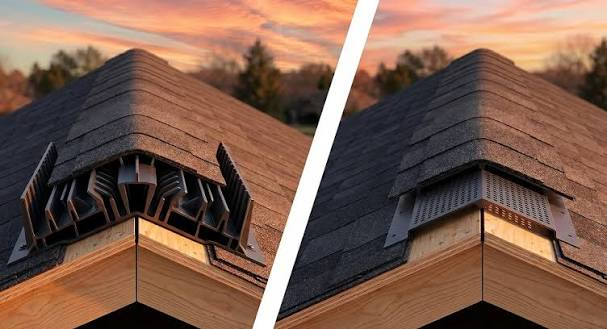
A ridge vent is a ventilation opening installed along the peak of a sloped roof. It allows air from the attic to exit through an opening protected by a specially designed vent covering.
As outdoor air enters through lower intake openings, such as soffit vents, air can move through the attic and escape near the ridge.
Wind pressure and natural buoyancy can contribute to this movement.
During warmer conditions, air beneath the roof may become hotter than the surrounding outdoor air. A properly balanced ventilation system allows some of that heat to escape.
In colder weather, attic ventilation can help remove moisture entering from the living space.
However, ventilation alone cannot correct excessive indoor air leakage, inadequate insulation, or roof leaks.
An effective attic system combines airflow management with proper insulation and air sealing.
Signs That an Attic May Need Better Ventilation
Homeowners often notice ventilation problems indirectly rather than through an obvious roof defect.
Certain conditions may suggest that attic airflow should be evaluated.
Excessive attic heat
Attics naturally become warm during sunny weather, but unusually high temperatures may indicate insufficient airflow, inadequate insulation, or both.
Moisture on roof decking
Condensation on the underside of roof sheathing can suggest that moist indoor air is reaching a cold attic.
Musty odors
Persistent odors may indicate moisture accumulation or microbial growth.
Rusted roofing fasteners
Corrosion on nails and metal components can occur when attic humidity remains elevated.
Ice dams in cold climates
Ice dams may form when roof temperatures vary significantly, allowing snow to melt and refreeze near colder roof edges.
Although ventilation can contribute to roof temperature control, insulation and air sealing are also essential.
Uneven indoor comfort
Rooms beneath the attic may feel unusually hot or cold when the roof assembly and ceiling insulation are not performing effectively.
These symptoms do not confirm that ridge ventilation is the problem. A complete attic inspection is necessary before choosing upgrades.
Start With an Attic Airflow Assessment
Installing a larger ridge vent without assessing existing intake ventilation may provide little benefit.
A roof ventilation system must allow air to enter as well as exit.
Begin by identifying all existing attic vents, including soffit vents, gable vents, roof vents, and ridge vents.
Check whether insulation blocks airflow through soffit openings.
Inspect the attic for disconnected bathroom exhaust ducts, leaking ceiling penetrations, and moisture damage.
Bathroom and kitchen exhaust systems should discharge outdoors rather than into the attic.
The roof’s shape and attic configuration also matter.
Simple gable roofs may accommodate continuous ridge ventilation effectively, while complex rooflines with multiple valleys, hips, and short ridge sections may require a different approach.
A roofing professional can calculate the ventilation area’s requirements and determine whether the existing system provides adequate airflow.
Upgrade 1: Replace Damaged or Inefficient Ridge Vents
Older ridge vents may become damaged through weather exposure, improper fastening, or installation defects.
Some products can also become obstructed by debris or deteriorated components.
If the existing ridge vent has cracked sections, loose coverings, or damaged weather barriers, replacement may be appropriate.
Modern ridge vents are available in designs that provide continuous ventilation while limiting wind-driven rain, snow, and pest entry.
Products vary in their net free ventilation area, commonly abbreviated as NFVA.
This measurement describes the effective open area available for airflow.
When replacing an existing vent, compare its ventilation capacity with the attic’s requirements.
A larger external vent profile does not necessarily mean greater effective airflow.
Select a product compatible with the roofing material, roof pitch, and local weather conditions.
Upgrade 2: Improve Soffit Intake Ventilation
Ridge vents cannot function effectively without sufficient replacement air entering the attic.
Soffit vents are commonly installed along the underside of roof overhangs to provide this intake.
When soffit openings are blocked by insulation, stored materials, or construction debris, airflow may become restricted.
A common improvement involves clearing existing intake openings and installing suitable ventilation baffles.
Baffles maintain an air passage between the roof sheathing and insulation near the eaves.
Where existing intake capacity is inadequate, additional soffit vents may be necessary.
However, cutting new openings requires careful consideration of framing, weather protection, and applicable building requirements.
Intake and exhaust ventilation should be designed as a coordinated system rather than modified independently.
Upgrade 3: Install Continuous Ridge Ventilation
Some older roofs use individual box vents spaced across the upper roof surface.
Where suitable, a continuous ridge vent may provide more uniform exhaust ventilation along the roof peak.
Installation generally involves creating a correctly sized opening along the ridge and covering it with an approved ventilation product.
The vent is then secured and finished according to the manufacturer’s roofing system requirements.
On many roofs, installation is most practical during a scheduled roof replacement because the ridge shingles are already being removed.
However, ridge vents should not be installed indiscriminately.
The opening must maintain required clearances near ridge ends, intersections, and structural components.
Proper flashing, fastening, and weather protection are critical.
A poorly installed ridge vent can allow rain or snow infiltration, creating damage that outweighs potential ventilation benefits.
Upgrade 4: Balance Ridge Exhaust With Intake Ventilation
Balanced ventilation is essential for achieving consistent attic airflow.
A common mistake is installing a ridge vent with a large exhaust capacity while providing insufficient intake near the eaves.
This imbalance can reduce the system’s effectiveness and may draw air through unintended openings.
Roof ventilation requirements are generally expressed as net free ventilation area.
Depending on local building codes and specific conditions, minimum ventilation ratios may be based on 1 square foot of net free ventilation area for every 150 or 300 square feet of attic floor area.
The appropriate ratio depends on the building design and applicable requirements.
For balanced systems, manufacturers commonly recommend approximately equal intake and exhaust ventilation capacity.
Roof Vent Calculator for Balanced Airflow
+1
Homeowners should avoid calculating ventilation requirements solely from the visible length of ridge vents.
Product specifications, roof geometry, and existing intake openings must all be considered.
Upgrade 5: Prevent Air Leakage From Living Spaces Into the Attic
Attic ventilation upgrades are more effective when unwanted air movement from conditioned rooms is controlled.
Warm, moisture-laden indoor air can escape through ceiling gaps around recessed lights, plumbing penetrations, attic hatches, and electrical openings.
During cold weather, this air may condense on cooler attic surfaces.
Air sealing helps limit unwanted moisture movement and reduce energy losses.
Common improvements include sealing appropriate ceiling penetrations, installing weatherstripping around attic access openings, and addressing disconnected exhaust ducts.
Only use sealing materials approved for the location and temperature exposure.
Maintain required clearances around chimneys, flues, and heat-producing equipment.
According to ENERGY STAR, attic air sealing, insulation, and ventilation work together to improve comfort and reduce moisture-related problems.
ENERGY STAR
Ridge Vent Upgrade Costs and Project Complexity
The cost of improving ridge ventilation varies according to roof accessibility, existing materials, labor requirements, and the extent of related repairs.
| Upgrade | Relative cost | Main benefit |
| Clearing blocked soffit vents | Low | Restores intake airflow |
| Installing ventilation baffles | Low–moderate | Maintains airflow pathways |
| Replacing damaged ridge vents | Moderate | Restores exhaust performance |
| Adding continuous ridge ventilation | Moderate–high | Improves exhaust distribution |
| Improving attic air sealing | Variable | Reduces unwanted heat and moisture movement |
| Reworking the complete vent system | High | Corrects significant design problems |
When the roof already requires replacement, ridge vent installation may be more economical because roofing materials near the ridge are already being removed.
For otherwise sound roofs, homeowners should weigh the benefits against the disruption and cost of modifying existing materials.
Avoid Mixing Incompatible Attic Exhaust Systems
Adding more ventilation openings does not automatically improve attic performance.
Combining ridge vents with powered attic fans, roof turbines, or certain other exhaust vents can create unintended airflow patterns.
In some configurations, an exhaust device may draw outdoor air through nearby ridge vents rather than from lower soffit openings.
This can reduce effective ventilation and potentially increase the risk of moisture infiltration.
Manufacturers such as GAF advise avoiding mixed exhaust systems in many ridge-vent configurations unless the complete design specifically supports them.
Exhaust Vent For Roof Ri
+1
Before adding new vents, evaluate the entire attic ventilation arrangement.
How Ridge Vents Affect Summer and Winter Conditions
Ridge ventilation performs different functions as outdoor temperatures change.
During summer, warm attic air can escape through upper vents while replacement air enters through lower openings. This helps limit heat buildup beneath the roof.
However, indoor cooling savings depend on attic insulation, climate, roof materials, and overall building performance.
During winter, ventilation helps remove moisture while supporting colder roof deck conditions.
When combined with effective ceiling insulation and air sealing, this can help reduce certain conditions associated with ice dam formation.
During humid weather, ventilation can assist moisture management, but excessive indoor humidity, roof leaks, and uncontrolled air leakage still require correction.
Ridge vents should be considered one component of a complete roof and attic system rather than a standalone solution for every temperature or moisture problem.
Maintenance Practices That Keep Ridge Vents Working
Regular inspection helps identify ventilation problems before they damage roofing materials.
Homeowners should watch for loose ridge caps, visible storm damage, and blocked intake openings.
After severe storms, inspect the roof from a safe ground-level position for displaced materials.
Attic inspections may reveal moisture stains, unusual odors, or damp insulation.
Avoid storing items against soffit vents or compressing insulation near the eaves.
If roof work is necessary, hire an experienced roofing professional rather than attempting unsafe repairs on elevated or steep surfaces.
Never walk on a damaged roof or enter an attic where structural deterioration is suspected.
When a Ridge Vent Upgrade May Not Be Appropriate
Ridge ventilation is not suitable for every roof.
Some roof designs have limited ridge length, insufficient low-level intake opportunities, or complex attic compartments.
Certain unvented roof assemblies are intentionally designed without conventional attic ventilation.
Adding ridge vents to these systems without understanding the roof assembly can create moisture or energy-performance problems.
Likewise, a home with serious roof leaks or deteriorating sheathing needs corrective repairs before ventilation upgrades.
A professional assessment helps determine whether the roof should use continuous ridge vents, alternative exhaust arrangements, or an entirely different ventilation strategy.
Final Thoughts
Roof ridge vent upgrades can improve attic airflow, support moisture management, and help moderate temperature buildup beneath residential roofing systems.
Replacing damaged ridge vents, improving soffit intake openings, installing continuous ventilation, and correcting attic air leaks are practical ways to improve performance.
The most successful upgrades focus on balanced airflow rather than simply increasing the number of roof openings.
By considering roof design, ventilation capacity, insulation, and installation quality together, homeowners can create a more reliable attic ventilation system that supports indoor comfort and long-term roofing durability.