What Makes a Home Feel Stylish Without Looking Staged
A stylish home does not look like a furniture catalogue. It looks like someone with taste actually lives there. The difference is personality: a mix of textures, a few objects with a story, colours that repeat naturally from room to room, and furniture arranged for real life rather than for a photograph. When a home feels both beautiful and comfortable, it has been decorated, not just furnished.
Refreshing your interiors does not require a renovation or a large budget. Most tired rooms suffer from the same few problems: furniture that has not moved in years, lighting that is too harsh, a colour palette that has drifted, and surfaces covered with objects that no longer earn their place. Fix those four things and the room changes, often for very little money.
Begin With a Colour Story, Not a Shopping Trip
Every good decorating refresh starts with colour. Choose a palette of three to five colours and use it across the home so rooms feel connected. A practical framework is the 60-30-10 rule: a dominant colour for about sixty percent of the room, such as walls and large furniture, a secondary colour for thirty percent, such as curtains and upholstery, and an accent colour for ten percent, such as cushions, art, and accessories.
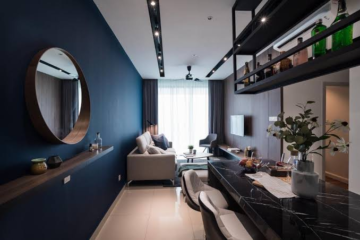
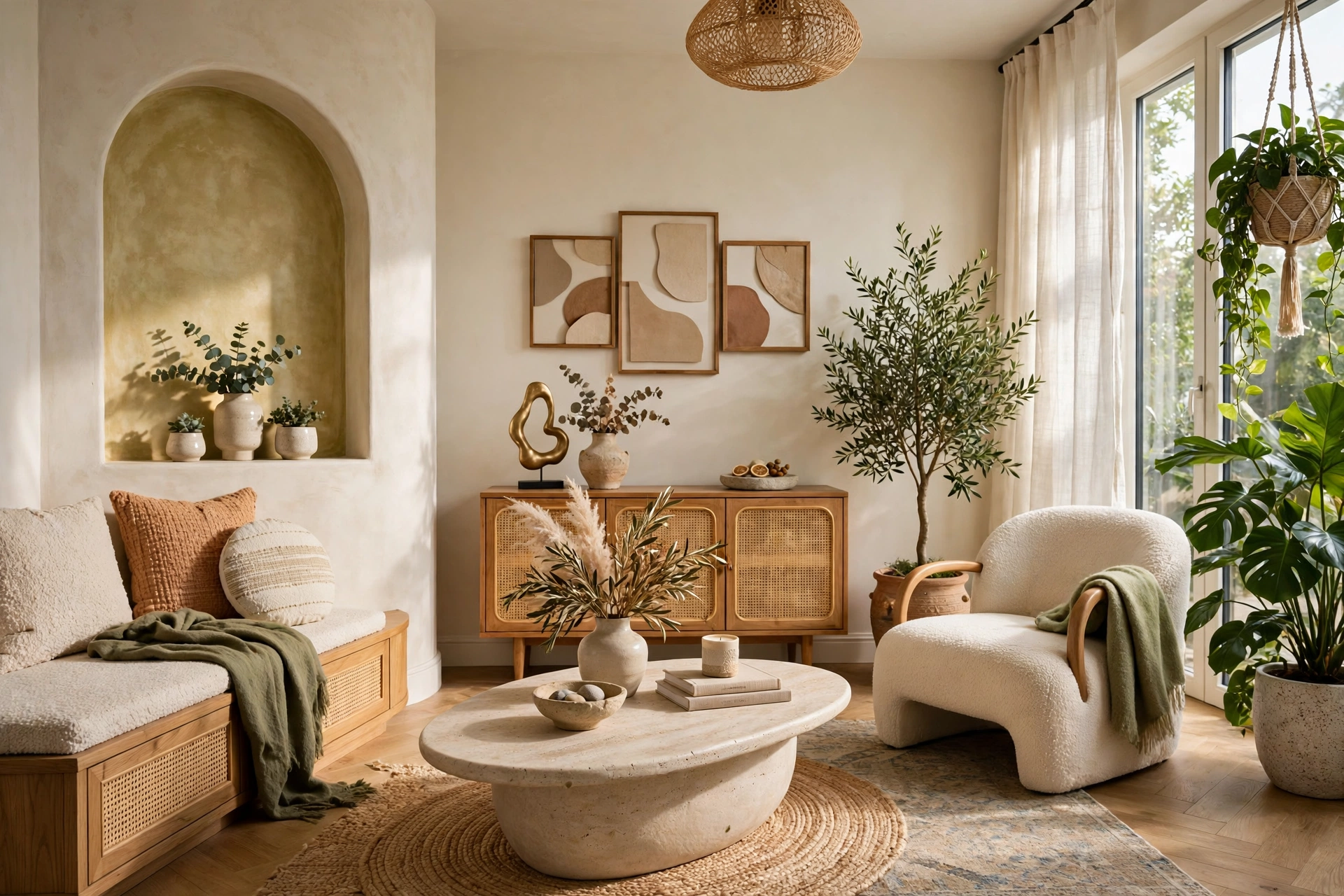
Warm neutrals such as soft beige, warm taupe, and muted sage create a calm base that suits almost any style. Add depth with one richer tone, such as deep green, navy, or terracotta, and brightness with one lighter accent, such as cream or soft gold. Test paint colours on the wall and look at them in daylight and lamplight before committing, because a colour that looks perfect in the shop can look very different at home.
Rearrange First: The Free Refresh Most Homes Skip
Moving furniture costs nothing and changes a room more than most purchases. Pull the sofa away from the wall and angle chairs toward each other to create a conversation area. Move a bookshelf to a different wall and the whole room reads differently. Swap a lamp, a rug, or a piece of art between rooms and both rooms feel new.
When rearranging, think about how people move through the room. Leave clear paths of at least thirty inches between furniture pieces, and make sure every seat has a surface nearby for a cup or a book. A room that is easy to walk through and easy to sit in feels welcoming, while a room where furniture blocks the natural path feels tense, even if it looks good in a photograph.
Statement Pieces That Anchor Each Room
Every room needs one piece that gives it character. It might be an oversized piece of art, a bold area rug, a distinctive lamp, or a vintage cabinet. The statement piece sets the tone for everything else in the room, so choose it first and let the smaller items support it rather than compete with it.
A statement piece does not need to be expensive. A large plant in a beautiful pot, a handmade ceramic vase, a colourful rug found at a market, or a piece of furniture painted in a bold colour can all anchor a room. What matters is scale and confidence. A small, timid statement piece disappears. A bold piece, placed with space around it, gives the whole room a centre.
When you choose a statement piece, pay attention to scale and placement as much as to style. A large rug should be big enough for the front legs of the sofa and chairs to sit on it, and a large piece of art should cover about two-thirds of the width of the furniture beneath it. A piece that is too small looks timid, while a piece that is too large crowds the wall. Leave breathing room around it, because empty space is what lets a bold piece stand out.
Layering Texture and Pattern Like a Designer
Texture is what makes a room feel rich instead of flat. Mix smooth and rough, soft and hard, matte and glossy. Pair a smooth linen sofa with a chunky knit throw, a velvet cushion, and a woven basket. Layer a soft wool rug over a natural jute base. Combine a polished wooden table with a rough ceramic vase. Each contrast adds interest without adding colour or clutter.
Pattern works the same way when it is used with restraint. Mix one large pattern, such as a bold floral or geometric rug, with one medium pattern, such as striped cushions, and one small pattern, such as a dotted throw. Keep them in the same colour family so they feel related. If the patterns start fighting each other, remove one and let the room breathe.
Personal Objects and Collections That Make a Home Yours
A home becomes unique when it shows the lives of the people in it. Family photographs, travel souvenirs, handmade objects, inherited pieces, and collections built over years are what separate a personal home from a generic one. Display them thoughtfully rather than scattering them across every surface.
Group a collection together so it reads as a display instead of clutter. Three or five related objects on a shelf, a gallery wall of family photographs in matching frames, or a single shelf dedicated to travel finds all work. Rotate items seasonally so the display stays fresh and the pieces you love get seen. A home that tells your story will always feel more stylish than a home that copies someone else’s.
Lighting, Mirrors and Plants as Decorating Tools
Lighting is the most powerful decorating tool in a home, and it is often the most neglected. Replace a single harsh ceiling light with layered lighting: a floor lamp in a dark corner, a table lamp beside the sofa, and a small lamp on a console. Warm bulbs, around 2700 to 3000 kelvin, make a room feel welcoming in the evening, while dimmer switches let one room serve many moods.
Mirrors and plants are the other two tools that transform a room for little money. A mirror opposite a window doubles the daylight and makes a small room feel larger. Plants add colour, texture, and life, and they soften the hard edges of modern furniture. Choose plants that suit the light in your room, and group them in odd numbers at different heights for a natural, collected look.
Refreshing Each Room on a Realistic Budget
You do not need to redecorate the whole house at once. Start with the room you use most, usually the living room, and make the biggest changes first. A fresh coat of paint, new cushion covers, and a rearranged layout can transform a living room for the cost of a weekend and a few tins of paint. Move on to the bedroom next, where new bedding and a decluttered bedside table make a surprising difference.
Spend money where it shows and where you touch it daily: a good rug, comfortable cushions, and lighting that works. Save money on items that are easy to change later, such as accessories and small decor. Thrift shops, markets, and online marketplaces are excellent sources for unique pieces with character, and a single vintage find often gives a room more personality than a whole set of new, matching decor.
Decorating Missteps That Make Interiors Feel Random
The most common decorating mistake is buying everything at once from one shop. The result looks coordinated but impersonal, like a hotel room. A home that is collected slowly, with pieces from different places and different times, feels far more interesting. Buy one piece at a time, live with it, and let the room grow.
The second mistake is ignoring scale. A tiny rug under a large sofa, a small lamp on a huge console, or a miniature picture on a vast wall all make a room feel unfinished. Measure before you buy, and choose pieces that fit the furniture and the wall they belong to. The third mistake is decorating every surface. Empty space is part of the design. A clear coffee table with one beautiful object looks more stylish than a table covered in ten small ones.
Final Thoughts: Style That Grows With Your Home
Refreshing your interiors with style and creativity is not about chasing the latest trend. It is about choosing a colour story you love, arranging your furniture for real life, adding texture and personal objects, and letting the room grow slowly instead of buying it all at once. Start with one room, make the free changes first, and add one confident piece at a time. A home decorated this way feels unique, comfortable, and unmistakably yours.
Home Decorating FAQs for Refreshing Your Interiors
How can I refresh my home without spending much money?
Start with free changes: rearrange furniture, declutter surfaces, swap decor between rooms, and clean the windows for more light. Then make low-cost changes such as new cushion covers, a fresh coat of paint on one wall, and a few plants. These small moves often change a room more than expensive new furniture.
What is the 60-30-10 colour rule?
It is a simple framework for a balanced palette. Use a dominant colour for about sixty percent of the room, such as walls and large furniture, a secondary colour for thirty percent, such as curtains and upholstery, and an accent colour for ten percent, such as cushions and accessories. It keeps a room feeling coordinated without looking matched.
How do I mix patterns without making a room look messy?
Mix patterns in different scales and keep them in the same colour family. Combine one large pattern, one medium pattern, and one small pattern, and give the eye a rest with solid colours between them. If the room starts to feel busy, remove one patterned item and the balance usually returns.
Should I follow current decorating trends?
Use trends as inspiration, not as instructions. A trend that suits your home and your taste is worth trying, especially in items that are easy to change, such as cushions and art. Avoid building a whole room around a trend, because trends fade and a room built on one will date quickly.
How do I make my home look stylish but still comfortable?
Choose furniture you actually enjoy sitting on, add soft textures such as throws and rugs, and keep everyday items within easy reach. Style comes from colour, texture, and personal objects, not from keeping a room empty. A home that is comfortable to live in always looks more inviting than a home that is only good to look at.
What is the easiest way to add personality to a room?
Display things that mean something to you: family photographs, travel finds, handmade objects, and books you have actually read. Group them together so they read as a collection, and give them space to be seen. One shelf of personal objects changes a room more than a whole set of generic decorations.