Hardwood floors add warmth, beauty, and long-term value to a home, but they can also be vulnerable to scratches, dents, and everyday wear. One of the simplest ways to keep them looking their best is by using furniture pads. These small protectors attach to the bottom of furniture legs, creating a soft barrier between the furniture and the floor.
With so many materials, shapes, and sizes available, choosing the right furniture pads can feel confusing, especially if you’re buying them for the first time. The wrong type may wear out quickly, fall off, or fail to provide enough protection.
This guide explains how furniture pads work, the different types available, and how to choose the best ones for your hardwood floors.
Why Furniture Pads Matter
Every time you move a chair, pull out a dining table, or shift a sofa, the legs create friction against the floor. Over time, this repeated movement can leave behind scratches, scuff marks, or even deep dents.
Furniture pads help by:
- Preventing scratches
- Reducing floor wear
- Making furniture easier to move
- Lowering noise when chairs slide
- Extending the life of hardwood flooring
They are inexpensive compared to repairing or refinishing damaged wood floors, making them a smart investment for almost any home.
What Are Furniture Pads?
Furniture pads are protective cushions attached to the bottom of furniture legs or bases. They are available in different materials and attachment methods to suit various types of furniture and flooring.
Common furniture that benefits from pads includes:
- Dining chairs
- Tables
- Sofas
- Coffee tables
- Beds
- Dressers
- Cabinets
- Bookshelves
- Bar stools
- Desks
Even lightweight furniture can gradually damage hardwood if moved frequently.
Types of Furniture Pads
Choosing the right material is one of the most important decisions.
Felt Furniture Pads
Felt pads are among the most popular choices for hardwood flooring.
They provide a smooth surface that allows furniture to glide without scratching the wood.
Best for:
- Dining chairs
- Tables
- Living room furniture
- Bedroom furniture
Advantages:
- Soft on hardwood
- Quiet movement
- Affordable
- Easy to replace
Rubber Furniture Pads
Rubber pads are designed more for grip than sliding.
They help prevent furniture from shifting across the floor.
Best for:
- Sofas
- Heavy cabinets
- Recliners
- Entertainment centers
Rubber works well when you want furniture to stay in place.
Cork Furniture Pads
Cork is a natural material that offers moderate cushioning while protecting floors.
Although less common than felt, cork pads are durable and environmentally friendly.
Plastic or Nylon Glides
Plastic glides are often used on carpet but generally aren’t the best choice for hardwood.
Hard plastic may scratch wood surfaces if debris becomes trapped underneath.
Self-Adhesive vs Nail-On Furniture Pads
Furniture pads also differ in how they attach.
Self-Adhesive Pads
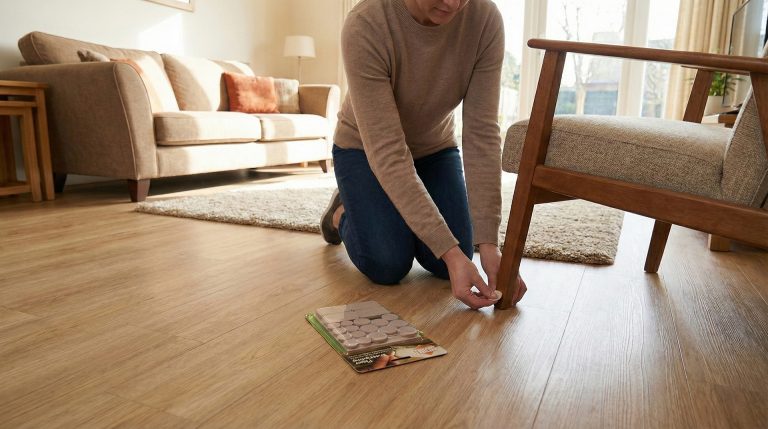
These have a sticky backing that attaches directly to clean furniture legs.
Pros
- Quick installation
- No tools required
- Easy to replace
- Suitable for most household furniture
Cons
- Adhesive may weaken over time
- Can loosen with frequent movement
Nail-On Pads
These include a small nail that secures the pad to wooden furniture legs.
Pros
- Longer-lasting attachment
- Better for heavy furniture
- Less likely to fall off
Cons
- Require careful installation
- Only suitable for solid wood legs
Choosing the Right Size
A furniture pad should match the size of the furniture leg as closely as possible.
Pads that are too small may expose sharp edges, while oversized pads can become noticeable and wear unevenly.
Measure:
- Width
- Diameter
- Shape
- Leg thickness
Many manufacturers offer assorted packs that include multiple sizes.
Match the Shape
Furniture pads come in several shapes.
Round Pads
Ideal for:
- Round chair legs
- Table legs
- Stool legs
Square Pads
Suitable for:
- Square furniture legs
- Cabinet bases
- Modern furniture
Rectangular Pads
Often used for:
- Benches
- Sofas
- Wide furniture legs
Custom-Cut Pads
Some felt sheets can be trimmed to fit unusual furniture shapes.
These work well for antique furniture or oversized bases.
Consider Furniture Weight
The heavier the furniture, the more durable the pad should be.
Lightweight Furniture
Examples include:
- Dining chairs
- Small tables
- Nightstands
Standard felt pads usually provide enough protection.
Medium-Weight Furniture
Examples include:
- Desks
- Coffee tables
- Dressers
Choose thicker felt or higher-density pads.
Heavy Furniture
Examples include:
- Bookcases
- Large sofas
- Entertainment units
- Cabinets
Heavy-duty felt or nail-on pads generally last longer under constant weight.
Think About How Often Furniture Moves
How frequently you move furniture should influence your choice.
Frequently Moved Furniture
Dining chairs and office chairs experience constant movement.
High-quality felt pads are usually the best option because they slide smoothly across hardwood.
Rarely Moved Furniture
Beds, cabinets, and bookshelves benefit from durable pads designed for long-term support.
Choose Quality Over Price
Very inexpensive furniture pads may seem like a bargain, but they often:
- Wear out quickly
- Flatten under weight
- Lose adhesive
- Peel away
- Collect dirt
Higher-quality pads usually provide better long-term value because they last longer and protect floors more effectively.
Installation Tips
Proper installation helps furniture pads stay attached.
Before applying them:
- Clean the furniture leg thoroughly.
- Remove dust and grease.
- Allow the surface to dry completely.
- Center the pad carefully.
- Press firmly for several seconds.
For adhesive pads, allowing the adhesive to bond before moving furniture can improve durability.
Maintenance Tips
Furniture pads should be inspected regularly.
Over time they collect:
- Dust
- Hair
- Sand
- Small debris
These particles can become trapped beneath the pad and scratch hardwood.
Regular maintenance includes:
- Vacuuming around furniture.
- Replacing worn pads.
- Cleaning accumulated dirt.
- Checking loose adhesive.
Replacing worn pads is much cheaper than repairing damaged floors.
Common Mistakes to Avoid
Many homeowners accidentally reduce the effectiveness of furniture pads by making simple mistakes.
Avoid:
- Using plastic glides directly on hardwood.
- Choosing pads that are too small.
- Installing pads on dirty furniture legs.
- Ignoring worn-out pads.
- Dragging heavy furniture even with pads installed.
Lifting furniture whenever possible further reduces floor damage.
Are Furniture Pads Worth Buying?
For most homeowners, the answer is yes.
Furniture pads cost very little compared with the expense of sanding, refinishing, or replacing damaged hardwood flooring. They also make everyday tasks, such as moving chairs or rearranging furniture, much easier while reducing noise and wear.
Whether your floors are newly installed or have been in your home for years, furniture pads provide an easy layer of protection that helps preserve their appearance over time.
Frequently Asked Questions
Which furniture pads are best for hardwood floors?
Felt furniture pads are generally the best choice because they allow furniture to glide smoothly without scratching the wood.
How often should furniture pads be replaced?
It depends on use. Pads on frequently moved chairs may need replacement every few months, while pads under stationary furniture can last much longer. Inspect them regularly and replace them if they become thin, dirty, or loose.
Can furniture pads stop dents?
They help distribute weight more evenly, reducing the risk of dents, especially under lighter furniture. Extremely heavy furniture may still leave impressions over time, so thicker or heavy-duty pads are recommended.
Do adhesive furniture pads damage furniture?
Most adhesive pads can be removed without causing damage if they are replaced carefully. Cleaning off any remaining adhesive residue before applying new pads helps maintain a secure fit.
Can furniture pads be used on laminate or vinyl flooring?
Yes. Many felt furniture pads are suitable for laminate, vinyl, engineered wood, and other hard floor surfaces, although it’s always a good idea to check the manufacturer’s recommendations.
Final Thoughts
Choosing the right furniture pads is one of the easiest and most affordable ways to protect hardwood floors from everyday wear. The best option depends on the type of furniture, how often it moves, and the level of protection you need. In most homes, high-quality felt pads provide the ideal balance of floor protection, smooth movement, and quiet operation, while rubber or heavy-duty options may be better suited for furniture that should remain firmly in place.
Taking a few minutes to measure furniture legs, select the correct size, and install the pads properly can help prevent scratches, scuffs, and unnecessary floor repairs. Combined with regular cleaning and occasional pad replacement, this simple upgrade can keep your hardwood floors looking beautiful for years while making your furniture easier and safer to move.