Electric motors are at the heart of countless modern technologies. They power industrial machinery, household appliances, electric vehicles, robotics, pumps, compressors, and many other systems. As demand for electric motors continues to grow, manufacturers need production processes that can deliver higher output without compromising precision or reliability.
Winding is one of the most important stages of motor production. The quality and consistency of the winding process can directly influence motor performance. Automated winding machines are therefore becoming increasingly valuable for manufacturers seeking to improve production efficiency, reduce errors, and maintain consistent quality across large production volumes.
Why Winding Efficiency Matters
Motor winding involves arranging conductive wire around specific components according to carefully defined patterns. The process must be performed accurately because incorrect wire placement, inconsistent tension, or variations in winding can affect the final motor.
Traditional manual winding can be effective for certain applications, but it becomes more challenging as production volumes increase. Operators may experience fatigue during repetitive work, and differences in technique can lead to variations between products.
Automation provides a more consistent approach.A armature winding machine can follow programmed parameters repeatedly, helping manufacturers maintain standardized production processes.
The Role of an Armature Winding Machine
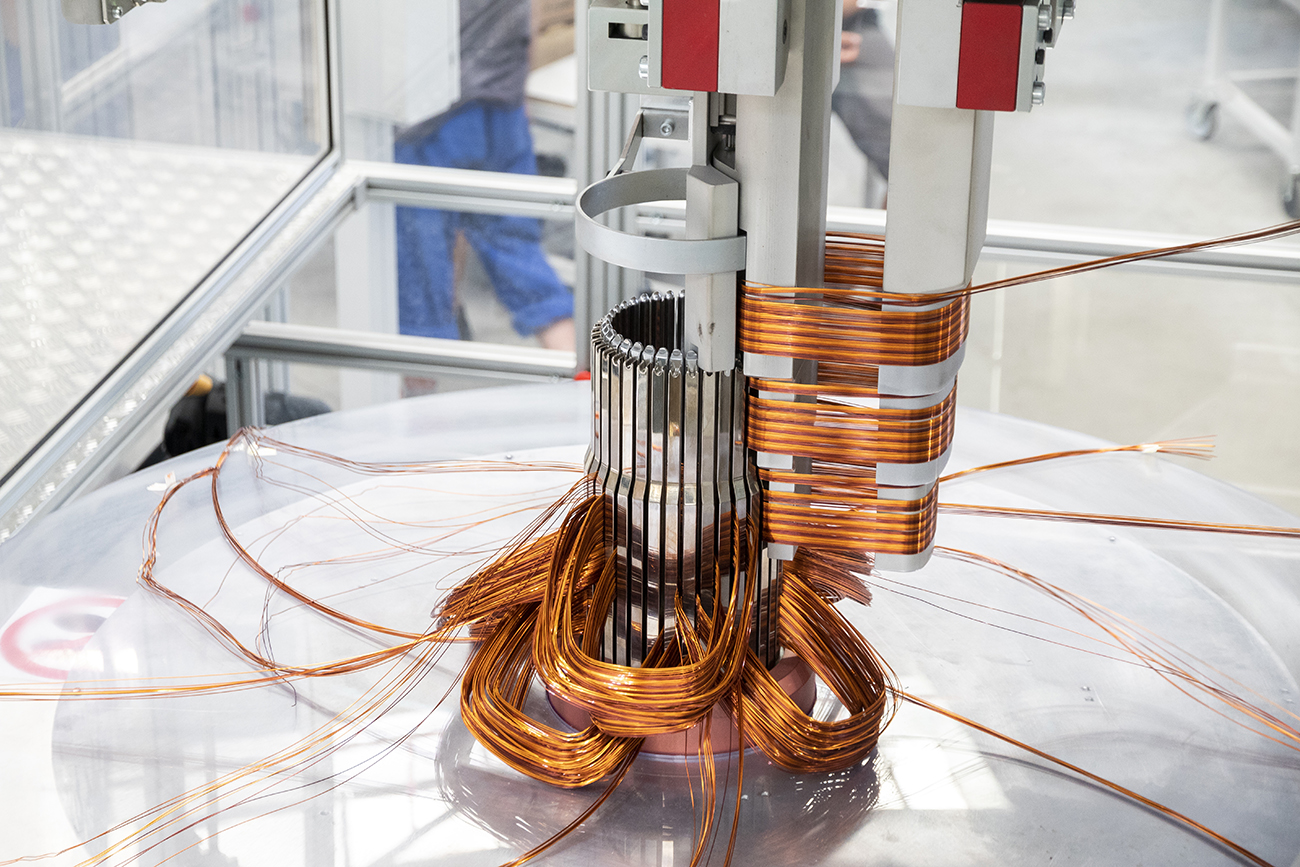
The armature is an important component in many electric motors, and its winding requires precision. An armature winding machine can automate the process of placing wire onto an armature according to predefined specifications.
Depending on the machine design, automated systems can control factors such as:
- Winding speed
- Wire tension
- Number of turns
- Wire positioning
- Winding patterns
- Production cycle timing
Controlling these variables helps manufacturers reduce inconsistencies and achieve more repeatable results.
For high-volume production, this repeatability can have a significant impact on overall manufacturing efficiency.
Improving Production Speed
One of the most obvious advantages of automated winding equipment is its ability to improve production speed. Machines can perform repetitive winding operations at a consistent pace without the fatigue associated with manual work.
When winding equipment is integrated into a larger production line, components can move from one manufacturing stage to another with fewer delays. This creates a smoother workflow and allows manufacturers to increase output.
Higher production speed does not have to mean lower quality. When automated equipment is properly configured, manufacturers can increase throughput while maintaining defined winding parameters.
Reducing Human Error
Human workers remain essential to manufacturing, but repetitive operations can naturally be affected by fatigue, distractions, and differences in individual working techniques.
Automated winding systems reduce the amount of repetitive manual work required. Once production parameters have been configured, the machine can repeat the same operation across multiple production cycles.
This consistency can be especially valuable for manufacturers producing large quantities of identical or similar motors.
Employees can instead focus on machine supervision, maintenance, quality checks, and other technical responsibilities.
Benefits of Fully Automated Winding
As manufacturing technology develops, automation is moving beyond individual machines toward more complete production solutions. A fully automatic armature winding machine can perform winding operations with minimal manual intervention while maintaining programmed production settings.
Such systems can help reduce the number of manual steps involved in the winding process. Depending on the equipment and production line, automation may also support material handling, machine monitoring, parameter management, and quality-related processes.
This can create a more streamlined manufacturing environment where operators supervise the process rather than manually performing every winding operation.
Improving Product Consistency
Consistency is one of the most important factors in large-scale motor manufacturing. Customers expect motors from the same production line to provide similar performance and reliability.
Automated winding equipment can help manufacturers achieve this consistency by repeating predefined winding patterns and operating parameters.
A consistent winding process can contribute to more predictable electrical characteristics and reduce variations between individual motors.
This is particularly important for manufacturers supplying industries such as automotive, industrial automation, robotics, and consumer electronics.
Reducing Material Waste
Motor manufacturing involves materials that can become costly when production volumes are high. Copper wire, insulation materials, armature components, and other parts must be used efficiently.
Winding errors can result in damaged components, rework, or wasted wire. Automated systems can reduce the likelihood of such errors by maintaining controlled winding conditions.
Better material utilization can help manufacturers lower unnecessary production costs while also supporting more sustainable manufacturing practices.
Supporting Quality Control
Automated winding equipment can also contribute to better quality control. Modern machines may incorporate sensors and monitoring functions that provide information about the winding process.
If a production parameter moves outside the expected range, operators can investigate the issue before a large number of products are affected.
Winding equipment can also be combined with automated testing systems. After winding, motors or components can undergo appropriate inspections and electrical tests to verify that they meet required specifications.
Integrating quality checks into the production process helps manufacturers identify problems earlier.
Connecting Winding With Smart Manufacturing
Modern manufacturing increasingly relies on connected equipment and production data. Automated winding machines can become part of a broader smart manufacturing environment where machines communicate with other production systems.
Data such as production cycles, machine operating conditions, and equipment performance can be collected and analyzed.
This information can help manufacturers identify bottlenecks, monitor productivity, and plan maintenance activities.
For example, if a winding machine begins showing unusual operating patterns, maintenance teams may be able to investigate the issue before an unexpected breakdown interrupts production.
Supporting Different Motor Applications
Electric motors are manufactured for many different applications, and their winding requirements can vary. Automotive motors, industrial motors, appliance motors, and robotic systems may all require different specifications.
Modern automated equipment can provide greater flexibility by allowing production parameters to be adjusted according to the motor design.
This flexibility helps manufacturers adapt to changing product requirements while maintaining a high level of production consistency.
The Future of Automated Motor Winding
The development of industrial automation is likely to make winding systems even more intelligent. Future equipment may incorporate advanced sensors, machine vision, predictive maintenance, robotics, and increasingly sophisticated control software.
These technologies can help manufacturers create production environments where winding, assembly, testing, and inspection work together as a connected system.
The result could be more efficient factories capable of producing higher volumes while maintaining strict quality standards.
Conclusion
Automated winding machines are becoming an important part of modern motor manufacturing because they help manufacturers improve production speed, consistency, quality, and resource efficiency. By reducing repetitive manual operations and maintaining controlled production parameters, automated equipment can support the needs of high-volume manufacturing.
An armature winding machine can provide precise and repeatable winding operations, while a fully automatic armature winding machine can take automation further by reducing manual intervention throughout the production process.
As demand for electric motors continues to grow across automotive, industrial, robotics, and consumer applications, efficient winding technology will remain an important factor in building reliable and scalable manufacturing operations.