A range hood only does its job when the duct behind it is designed correctly. The short answer is this: use a ducted hood with rigid, smooth-wall metal duct, size the fan to your cooktop, keep the run as short and straight as possible, and terminate it outside the house. That combination removes cooking grease, steam, heat, and odors completely. A recirculating hood can trap some odor, but it returns moisture and combustion byproducts to the room. This guide walks through sizing, duct materials, routing, termination, and makeup air so the system you build actually clears the air every time you cook.
Why Grease and Steam Escape Most Kitchen Hoods
Cooking sends a rising plume of hot air, water vapor, and tiny grease droplets above the cooktop. A hood has to catch that plume before room air currents pull it away. Capture depends less on raw fan power than most people assume. Hood depth, mounting height, and face velocity — the speed of air entering the hood opening — matter as much as the cubic feet per minute (CFM) rating on the box. A shallow hood mounted too high can move a lot of air while missing the plume entirely.
How Much Airflow Does Your Cooktop Actually Need?
Sizing starts with the cooktop, not the hood. For a standard electric or induction range against a wall, the widely used rule is 100 CFM per linear foot of cooktop width, so a 36-inch cooktop needs roughly 360 CFM. Gas ranges need a heat-based calculation instead: allow about 1 CFM for every 100 BTU per hour of total burner output. A four-burner gas range totaling around 50,000 BTU calls for roughly 500 CFM, and a professional-style range above 60,000 BTU needs 600 CFM or more. High-heat cooking such as wok work or char-grilling pushes the target toward 600 to 1,200 CFM.
Island cooktops need more capacity because cross-drafts steal the rising plume and there are no walls to contain it. Add roughly 100 to 150 CFM over the equivalent wall installation, and choose a hood wider than the cooktop when the layout allows. Also check the rated CFM at a realistic static pressure. Independent testing has shown that an average 900-CFM hood may deliver only about 527 CFM at 0.15 inches of water column, the resistance a real duct run creates. Look for the HVI-certified rating at 0.10 to 0.15 inches of static pressure rather than the free-air peak number.
| Cooking Setup | Suggested Hood CFM | Typical Duct Diameter |
|---|---|---|
| 30-inch electric or induction range | 300 to 450 | 6 inches |
| 30 to 36-inch standard gas range | 400 to 600 | 6 to 8 inches |
| 36 to 48-inch pro-style gas range | 600 to 1,200 | 8 to 10 inches |
| Island installation, any fuel | Add 100 to 150 to the above | Match hood outlet |
Ducted Versus Recirculating: What Changes Inside Your Kitchen
A ducted hood exhausts air outside through a rigid metal duct. It removes grease, steam, heat, odors, and combustion byproducts from the house entirely, which is why it is the preferred choice for anyone who cooks regularly or uses a gas range. A recirculating hood pulls air through mesh grease filters and a charcoal filter, then blows it back into the room. It reduces some odor and catches some grease, but it removes no moisture and no heat.
The moisture difference is the one homeowners feel first. A single ten-minute boil releases roughly 1.2 pints of water vapor. With a recirculating hood, all of it stays indoors, condensing on windows, cabinets, and insulation. With a gas burner, the combustion byproducts stay indoors too. Recirculating hoods have a legitimate place only where ducting is genuinely impossible, such as a high-rise unit with no exterior wall access. In a house with any workable route outside, ducted is the right call.
- Ducted hoods remove grease, moisture, heat, and combustion byproducts completely.
- Recirculating hoods reduce odor only and return steam and heat to the room.
- Gas cooking should always be ducted outdoors when a route exists.
Choosing the Right Duct Size and Material for Your Hood
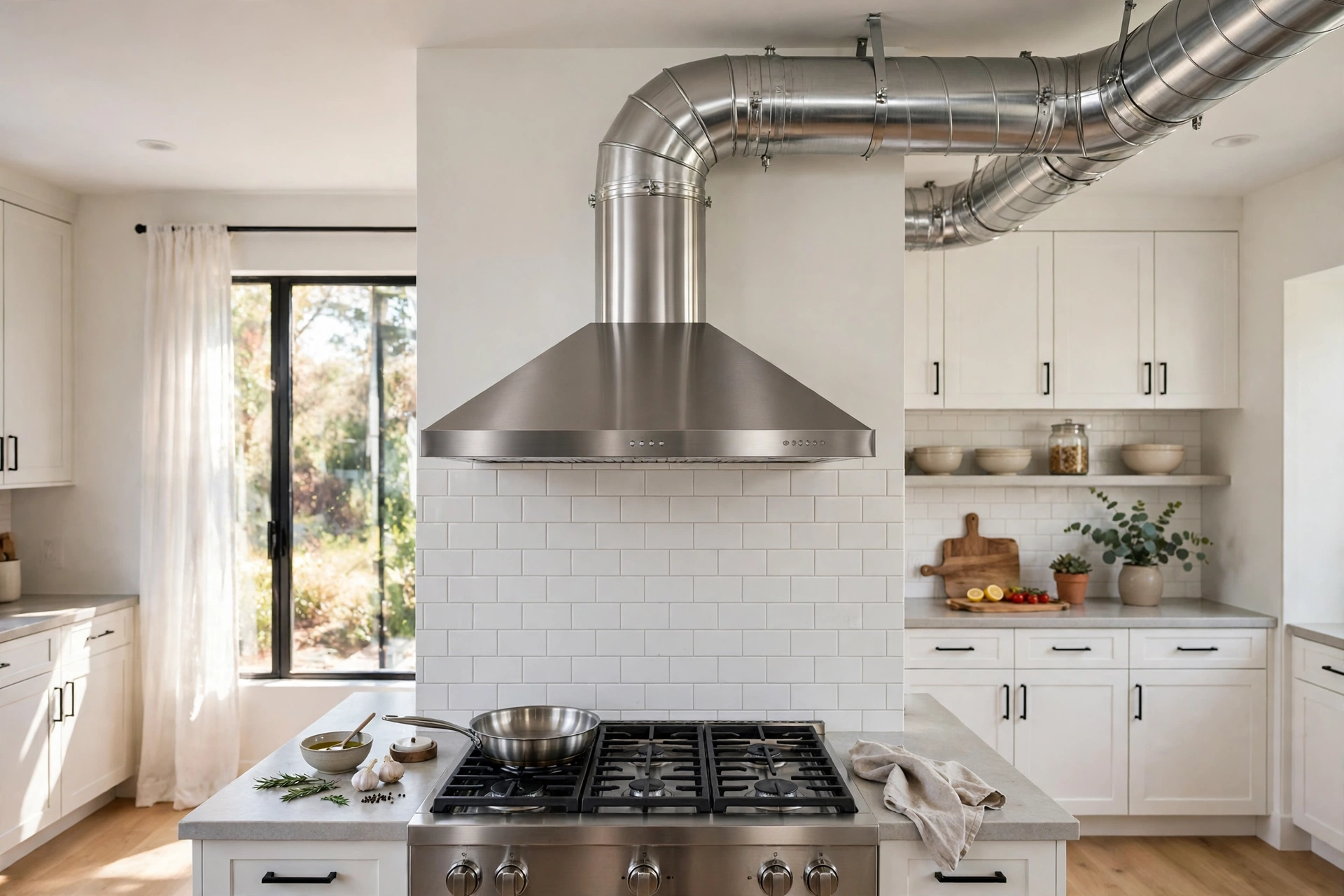
Use smooth-wall rigid metal duct — galvanized steel or aluminum — for the full run. Flexible duct looks tempting because it bends around obstacles, but its ridged interior creates turbulence and traps grease, and it can sag or crush inside a wall cavity. Match the duct diameter to the hood outlet and never neck it down; squeezing an 8-inch outlet into a 6-inch duct raises static pressure and can cut delivered airflow by a large fraction. Typical pairings are 6-inch duct for 300 to 450 CFM hoods, 8-inch for 400 to 600 CFM, and 8 to 10 inches for high-output hoods above 600 CFM.
Keep the run short and minimize bends. Each 90-degree elbow adds resistance roughly equal to 8 feet of straight duct, so two extra elbows can quietly erase a third of a hood's capacity. Use long-radius elbows where turns are unavoidable and support horizontal runs so joints cannot sag open. Seal every joint with foil tape or duct mastic, not cloth duct tape, which dries out and fails. In unconditioned spaces such as attics, insulate the duct to prevent warm, moist exhaust air from condensing inside it and dripping back toward the hood.
Mapping the Shortest Route From Hood to Outside Air
The best route is usually the shortest one with the fewest turns, and it is worth sketching before cutting anything. A wall hood on an exterior wall often vents straight out through the wall behind it — the simplest and most efficient layout. A hood on an interior wall may route up through the attic and out the roof, or across a soffit to a gable wall. Long horizontal runs through floor joists should follow the joist direction rather than crossing joists, which forces extra elbows and notching.
Measure the hood outlet size and note the manufacturer's maximum recommended duct length.
Sketch two or three possible routes and count elbows on each, including the termination cap.
Choose the route with the shortest equivalent length, favoring a wall exit over a roof exit when both are similar.
Check the path for framing, wiring, plumbing, and insulation that would force detours.
Confirm the termination point sits clear of windows, soffit vents, and air intakes.
Roof Caps, Wall Caps, and Termination Details That Prevent Backdrafts
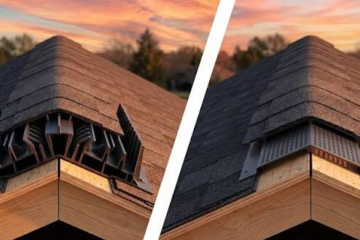
Every duct must terminate outside the house with a proper cap — never into an attic, crawlspace, garage, or soffit, which simply relocates the grease and moisture problem into your framing. A wall cap with a backdraft damper stops cold air and wind from blowing back down the duct when the fan is off. A roof cap needs correct flashing, a storm collar, and a damper, installed so rain runs over the flashing rather than into the penetration. Keep the termination at least a few feet from operable windows and fresh-air intakes so exhaust is not drawn straight back inside.
When a Big Hood Needs Makeup Air to Work Safely
A high-CFM hood removes a large volume of air from the house, and replacement air has to come from somewhere. In a tight, modern home, a hood above roughly 400 CFM can depressurize the house enough to backdraft combustion appliances, pulling flue gases from a water heater or furnace back into living space. Building codes commonly require a dedicated makeup air system once exhaust exceeds that threshold, typically an interlocked damper that opens to admit outside air whenever the hood runs.
Makeup air is not optional equipment for big hoods; it is a safety system. A simple interlocked damper tied to the hood switch is the usual residential solution, and some systems include a small heater to temper incoming winter air. If your home has atmospherically vented gas appliances and you are planning a 600 CFM or larger hood, discuss makeup air with your installer before the duct goes in. Retrofitting it after the kitchen is finished costs far more than planning for it.
Grease Filters, Cleaning Routines, and Duct Maintenance
Grease filters are the part of the system you will touch most, and their condition sets day-to-day performance. Baffle filters, common on higher-output hoods, trap grease in channels and can go through a dishwasher. Mesh filters catch finer particles but clog faster and restrict airflow when dirty. Check filters monthly if you fry or sear often, and clean them before the mesh looks saturated. A clogged filter can cut airflow as surely as a crushed duct.
- Clean baffle or mesh filters monthly when you cook with oil several times a week.
- Inspect the exterior cap and damper every year for nests, grease, and free movement.
- Never use a plastic dryer vent or flexible duct for a range hood exhaust run.
Range Hood Ducting Errors That Quietly Cut Performance in Half
The most expensive mistake is buying a big hood and strangling it with a small duct. An 8-inch outlet reduced to 6 inches, or a long run of flexible duct, can cut delivered airflow by nearly half even though the fan itself is fine. The second common error is venting into the attic or a soffit to avoid cutting a roof or wall penetration; the grease and moisture then condense on framing and insulation, creating stains, mold risk, and a fire hazard that is far harder to fix than a proper cap.
Final Thoughts: Designing Range Hood Ducting That Clears Grease and Moisture for Good
A good range hood ducting system is quiet, invisible, and boring — and that is the point. Size the fan to the cooktop, run rigid metal duct on the shortest straight path outside, seal the joints, add makeup air when the CFM demands it, and keep the filters clean. Do those five things and the hood will clear grease, steam, and odors for the life of the kitchen. Skip any one of them and even an expensive hood will underperform. Design the duct first, then choose the hood that fits it.
Range Hood Ducting Questions Homeowners Ask Before They Cut a Hole
How do I know what size duct my range hood needs?
Match the duct to the hood outlet and the fan's CFM. Most 300 to 450 CFM hoods use 6-inch duct, 400 to 600 CFM hoods use 6 to 8 inches, and hoods above 600 CFM need 8 to 10 inches. Never reduce the duct below the outlet size, and check the manufacturer's installation manual for the maximum recommended duct length for your model.
Can I vent a range hood into the attic instead of outside?
No. Venting into an attic, crawlspace, or soffit dumps grease and moisture into your framing and insulation, which causes stains, mold risk, and a fire hazard. Building codes require range hood exhaust to terminate outside the building envelope through a proper wall or roof cap with a backdraft damper.
How many elbows are too many in a range hood duct run?
Every 90-degree elbow adds resistance roughly equal to 8 feet of straight duct, so two or three elbows can noticeably cut airflow. Keep the run to as few bends as possible, use long-radius elbows, and count the termination cap as part of the total resistance when checking the manufacturer's maximum duct length.
Why does my powerful range hood still leave grease on the cabinets?
The usual causes are mounting height, a clogged filter, or a restricted duct. Capture falls sharply when a hood sits above 30 inches over the cooktop, a saturated mesh filter chokes airflow, and a reduced or flexible duct run cuts delivered CFM. Check the mounting height first, clean the filters, then inspect the duct for crushing or excessive elbows.
Do I really need makeup air for a 600 CFM range hood?
In most jurisdictions, yes. Codes commonly require dedicated makeup air when exhaust exceeds about 400 CFM, because a large hood can depressurize a tight home and backdraft gas appliances. An interlocked damper that opens when the hood runs is the standard solution, and it protects both performance and safety.
Is flexible duct ever acceptable for a range hood?
No, not for the exhaust run. Flexible duct has a ridged interior that creates turbulence, traps grease, and can sag or crush, all of which reduce airflow and create a fire risk. Use smooth-wall rigid galvanized steel or aluminum duct for the full run, sealed with foil tape or duct mastic.